From the outside, property management can occasionally look pretty quiet.
The rent came in. The resident hasn't called. There isn't a plumbing emergency. Nobody is moving in or moving out.
Excellent.
So...what exactly is the property management company doing?
A lot, actually.
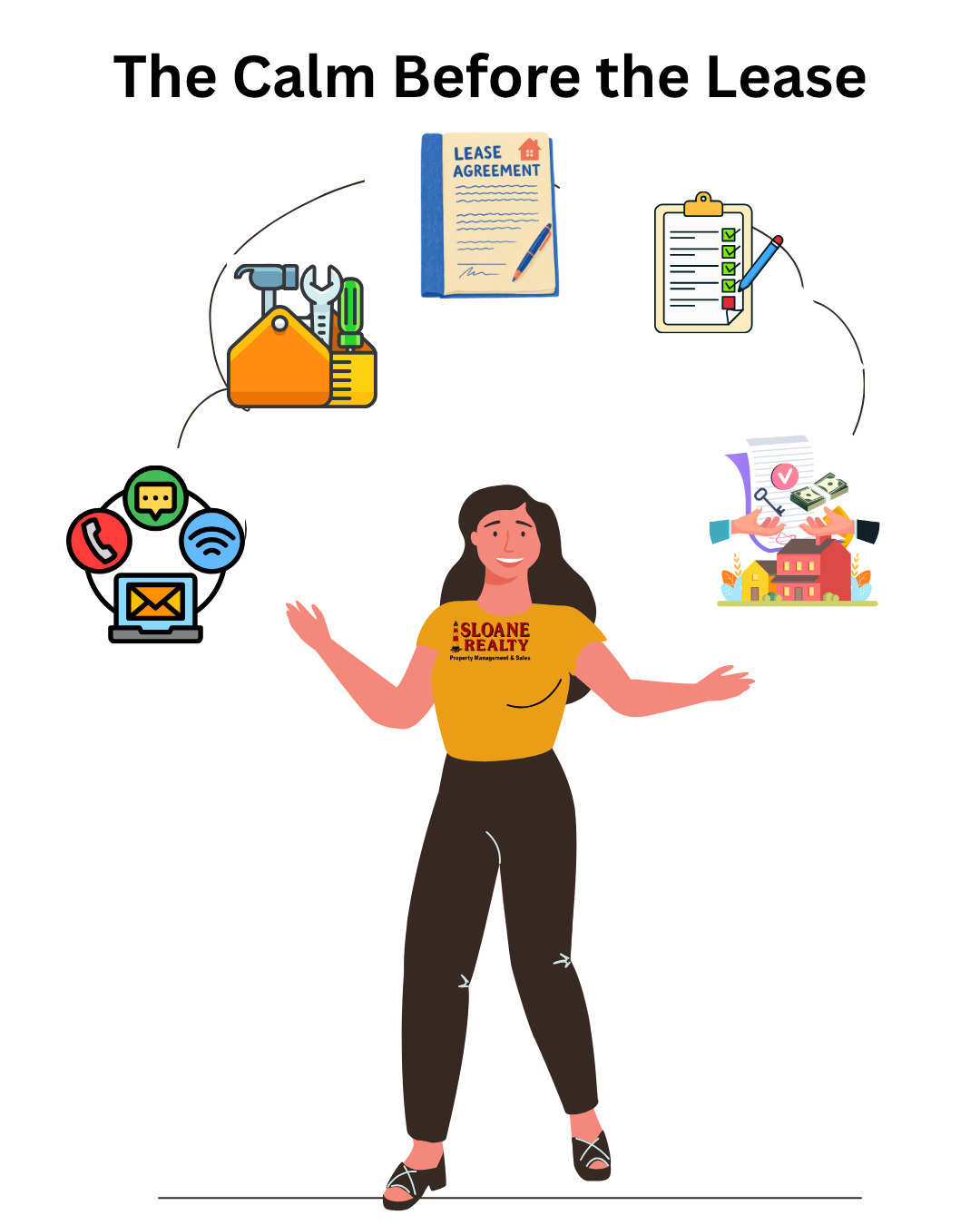
Professional property management isn't just responding when something goes wrong. Much of the work happens quietly in the background: monitoring leases, following up on maintenance, evaluating properties, reviewing accounts, communicating with residents, preparing renewals and watching the rental market.
And September is a great example.
While Charleston may still be debating whether fall is an actual season or merely a decorative concept, our property management team is already thinking ahead.
Here's what may be happening behind the scenes—even when everything at your rental property seems perfectly quiet.
What Does a Property Manager Do When There Are No Problems?
Property managers continuously oversee the financial, physical and administrative details of a rental property, even when there isn't an active maintenance request, vacancy or resident issue.
Some of the best property management is the work an owner never has to think about.
A lease deadline doesn't get missed.
A maintenance repair gets followed through to completion.
A resident receives the communication they need.
A renewal conversation starts before the lease is about to expire.
An accounting issue gets caught and corrected.
Those aren't emergencies.
That's the point.
Good property management shouldn't always feel like crisis management. A significant part of the job is handling the small things consistently so fewer of them become big things later.
Why Are Property Evaluations Important?
Routine property evaluations help property managers identify maintenance concerns, document property condition and spot issues that may need attention before they become more expensive.
A property can tell you quite a bit when you actually look at it.
During an evaluation, we're paying attention to the overall condition of the home and looking for concerns that may warrant follow-up.
Has a small plumbing issue developed?
Is there evidence of an exterior drainage concern?
Does something need maintenance before it turns into a larger repair?
Are there lease-related concerns that need to be addressed?
Evaluations aren't about trying to “catch” residents doing something wrong.
They're an opportunity to put experienced eyes on the property.
And sometimes what we don't find is just as valuable.
Everything looks good?
Wonderful.
We love boring.
Boring properties rarely call us at 2:00 a.m.
When Should a Property Manager Start Discussing a Lease Renewal?
Lease renewal planning should begin well before the lease expiration date so there is time to evaluate market conditions, property performance, resident history and the owner's plans for the property.
Waiting until a lease is days away from expiring isn't much of a strategy.
Before renewal time, there are several things to consider.
What are comparable Charleston rental properties currently leasing for?
How has the resident performed during the current lease?
Are there upcoming maintenance needs or improvements to consider?
Does the owner plan to continue renting the property?
What renewal terms make sense?
Starting early gives everyone time to make thoughtful decisions.
It also gives the resident time to decide whether they want to renew and, if they don't, gives us more time to prepare for marketing and turnover.
Nobody benefits from discovering on Thursday that we need a plan by Monday.
What Happens After a Rental Property Maintenance Request Is Submitted?
Property management maintenance coordination includes more than sending a vendor. It can involve troubleshooting, scheduling, resident communication, vendor coordination, reviewing findings, obtaining owner approval when needed, documenting the repair and following up on completion.
Maintenance can look deceptively simple from the outside.
Resident reports problem.
Vendor fixes problem.
Done.
Sometimes it really is that easy.
Other times, there are estimates to review, parts to order, schedules to coordinate, additional work to approve or a repair that needs to be checked after completion.
A good property management team isn't simply opening work orders. We're managing the process from the initial report through resolution.
Because “the vendor went out there” and “the problem has been resolved” are not necessarily the same sentence.
What Does Property Management Accounting Include?
Property management accounting can include rent collection, owner statements, vendor invoices, resident charges, security deposit accounting, management fees and documentation of property income and expenses.
This may be one of the least glamorous parts of property management.
There are very few dramatic Instagram reels about reconciling owner statements.
But accurate accounting is one of the most important services a property management company provides.
Behind the scenes, we're tracking money coming in and going out, processing invoices, reviewing charges and maintaining records so owners have a clear picture of their rental property's financial activity.
When everything is working properly, it can feel uneventful.
Again: we are big fans of uneventful accounting.
Why Does a Property Manager Monitor the Rental Market When a Property Is Already Occupied?
Monitoring the local rental market helps property managers make informed decisions about renewals, future rental pricing, vacancy strategy and property improvements.
We don't wait until a resident gives notice to start paying attention to the Charleston rental market.
Inventory changes.
Resident demand changes.
Comparable rental rates change.
Certain neighborhoods, property types and price ranges may perform differently from others.
Understanding what's happening in the market throughout the year helps us provide better guidance when it's time to discuss a renewal, market a vacant property or consider an improvement.
A rental property doesn't operate in a vacuum.
Even when yours is happily occupied, we're still watching what's happening around it.
What Does Lease Compliance Look Like During an Active Lease?
Lease compliance involves consistently monitoring and addressing issues related to the terms of the rental agreement, including rent obligations, property care, authorized occupants and other lease responsibilities.
A lease isn't something we sign, file away and rediscover eleven months later.
Throughout the lease term, property managers may need to address questions or concerns related to the rental agreement.
Sometimes that's straightforward.
Sometimes it requires documentation, communication and follow-up.
The goal isn't to manufacture conflict over every minor issue. It's to manage the lease consistently and professionally so expectations remain clear for both the resident and the property owner.
Consistency matters.
So does documentation.
Property managers tend to be rather fond of documentation.
What Are Property Managers Doing Behind the Scenes?
On any given week, a professional property management team may be:
Coordinating and following up on maintenance.
Reviewing upcoming lease expirations and renewals.
Communicating with residents and owners.
Monitoring rent collection and account activity.
Reviewing invoices and financial records.
Conducting or reviewing property evaluations.
Addressing lease compliance matters.
Monitoring the Charleston rental market.
Preparing available properties for marketing and leasing.
Coordinating vendors and property improvements.
Planning for seasonal property needs.
Documenting all of the above.
And that's before anything unexpected happens.
Because something unexpected will eventually happen.
It's property management. We don't make the rules.
Why Hire a Professional Property Manager If Your Rental Is Running Smoothly?
Professional property management isn't only valuable when a rental property has a problem. Its value also comes from the ongoing systems, oversight and planning that help keep the property running smoothly.
This is an important distinction.
Sometimes property management is very visible.
There's a move-in. A major repair. A difficult situation. A resident gives notice.
But much of our work isn't particularly dramatic.
It's a calendar reminder six months before something expires.
It's the second call to a vendor.
It's noticing something during an evaluation.
It's reviewing a renewal before it becomes urgent.
It's catching a discrepancy.
It's documenting a conversation.
It's looking at the rental market before an owner asks.
None of those things make for particularly exciting television.
They do, however, make for better property management.
Frequently Asked Questions About Property Management
What does a property manager do every month?
A property manager's monthly responsibilities can include rent collection, accounting, resident and owner communication, maintenance coordination, lease administration, compliance follow-up, property evaluations, renewal planning and rental market monitoring. The exact responsibilities depend on the property, lease and management agreement.
Does a property manager still work on my property if there are no maintenance requests?
Yes. Maintenance is only one part of property management. An occupied rental property still requires financial oversight, lease administration, communication, documentation, renewal planning and ongoing monitoring.
Why shouldn't property managers wait until a lease expires to discuss renewal?
Starting the renewal process early gives the owner and resident time to evaluate their options. It also allows the property manager to review current rental market conditions and prepare a marketing and turnover strategy if the resident decides not to renew.
Why are routine rental property evaluations useful?
Property evaluations provide an opportunity to document property condition, identify maintenance concerns and observe potential issues that may require follow-up. Finding a small problem early can sometimes prevent a larger and more expensive repair later.
What should I look for when choosing a property management company in Charleston, SC?
Rental property owners may want to ask about the company's experience, communication practices, maintenance procedures, accounting systems, resident screening, property evaluations, lease administration, renewal process, local market knowledge and emergency procedures.
Quiet Is Usually a Good Thing
At Sloane Realty, we don't measure good property management by how many emergencies we handle.
We'd rather prevent as many of them as possible.
That means doing the less-visible work: following up, documenting, evaluating, planning, communicating and paying attention to the details of your property throughout the lease.
So if you own a Charleston rental property and everything seems quiet, enjoy it.
Hopefully, your resident is happy, your property is performing well and nothing particularly interesting is happening.
Meanwhile, we'll be over here doing our best to keep it that way.
Because in property management, “nothing happened this month” can actually mean quite a lot happened behind the scenes.