You've decided to move.
Maybe you're relocating for work. Maybe your family has outgrown the house. Maybe you've finally found a home with enough closet space to accommodate your questionable collection of holiday decorations.
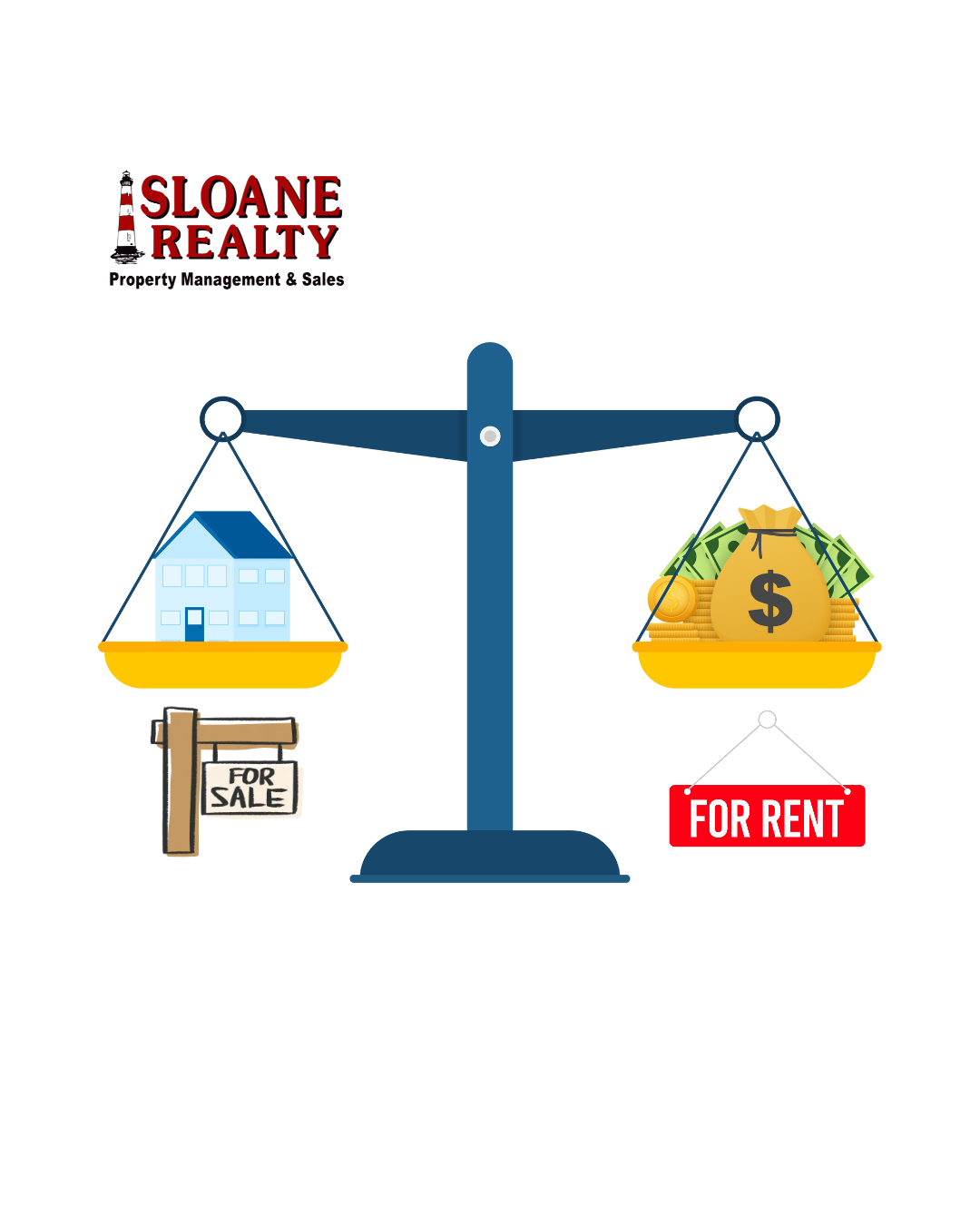
Whatever the reason, you've got one big decision to make:
Should you sell your current home or turn it into a rental property?
For homeowners in Charleston, Mount Pleasant, Summerville, Goose Creek and the surrounding Lowcountry, the answer isn't always straightforward.
Selling offers immediate access to your equity and a clean financial break. Renting may provide monthly income, long-term appreciation and the opportunity to build wealth over time.
But before you start mentally spending those rent checks, there's a little math we need to discuss.
The best decision depends on your home's market value, potential rental income, mortgage, expenses, equity, tax situation and long-term financial goals.
Let's break it down.
Is It Better to Sell or Rent Out Your Home in Charleston, SC?
Selling may be the better choice if you need access to your equity, want to eliminate ongoing ownership expenses or would earn a stronger return by investing the sale proceeds elsewhere. Renting may make more sense if the property can generate sufficient cash flow, you have adequate financial reserves and you want to hold the property as a long-term investment.
There isn't a universal answer.
A homeowner with a 3% mortgage, substantial equity and strong rental demand may be in a very different position from someone who purchased recently with a higher interest rate and little monthly cash flow.
And the Charleston real estate market adds another layer to the decision.
What Does the Charleston Real Estate Market Look Like in 2026?
Before deciding whether to sell or rent, homeowners should understand both sides of the local market.
According to Realtor.com's September 2026 Charleston city market report:
The median listing price was approximately $479,450, down 4.7% from the previous September.
Approximately 28% of active listings had experienced a price reduction.
Homes spent a median of 61 days on the market, according to that report.
These figures suggest sellers need to be thoughtful about pricing and competition. They don't necessarily mean selling is a bad decision, but they reinforce why a realistic market analysis matters.
The rental market tells a different part of the story.
Zillow's Charleston rental data reported an average asking rent of approximately $2,900 per month in September 2026, across all property types and bedroom counts.
That's encouraging for homeowners considering rental income, but averages can be misleading.
A three-bedroom home in Goose Creek won't necessarily command the same rent as a comparable home in Mount Pleasant, downtown Charleston or Daniel Island.
The Charleston rental market is hyper-local. Neighborhood, property type, condition, amenities, competing inventory and time of year all affect rental value.
And an average asking rent is not a guarantee of what your particular home will lease for.
Sources: Realtor.com, September 2026 Charleston housing market report; Zillow Rental Manager, September 2026 Charleston rental market data.
1. How Much Money Would You Actually Make by Renting Your Home?
Rental cash flow is the income remaining after accounting for mortgage payments, taxes, insurance, maintenance, vacancy, property management and other ownership expenses.
This is where we encourage owners to put down the calculator app that only subtracts the mortgage from the rent.
We know. That math looks much more exciting.
But rental income isn't the same thing as rental profit.
Let's look at a hypothetical Charleston-area rental property.
| Monthly item | Amount |
|---|---|
| Rental income | $2,800 |
| Mortgage, taxes and insurance | -$1,650 |
| Property management (example 10%) | -$280 |
| Maintenance reserve (example 8%) | -$224 |
| Vacancy reserve (example 5%) | -$140 |
| Estimated monthly cash flow | $506 |
In this example, the property generates approximately $6,072 in annual cash flow before income taxes and other expenses not included in the illustration.
That's certainly more realistic than assuming the owner is pocketing $1,150 every month.
And remember: a roof replacement, major HVAC repair, HOA assessment or expensive turnover can change the numbers quickly.
The percentages above are illustrative planning assumptions, not Sloane Realty's actual fees or guaranteed expense rates.
2. How Much Equity Could You Access by Selling?
Your estimated net proceeds from selling are the expected sale price minus your outstanding mortgage, selling expenses, repairs, concessions and other applicable costs.
Let's say your home could sell for $450,000.
| Estimated sale calculation | Amount |
|---|---|
| Sale price | $450,000 |
| Remaining mortgage | -$250,000 |
| Assumed selling costs (7%) | -$31,500 |
| Estimated proceeds before taxes and other adjustments | $168,500 |
The 7% selling-cost assumption is an example, not a standard commission rate. Actual brokerage compensation is negotiable, and closing expenses vary.
Now comes an important question:
Could that $168,500 work harder for you somewhere else?
Maybe the money would allow you to purchase your next home with a smaller mortgage.
Maybe it could pay off higher-interest debt.
Maybe you have another investment opportunity.
Or perhaps you value the peace of mind that comes from having access to your equity.
Holding real estate has opportunity costs. Just because a property generates positive cash flow doesn't automatically mean it's the best use of your money.
3. Does Having a Low Mortgage Interest Rate Make Renting More Attractive?
A low fixed-rate mortgage can make keeping a former primary residence more attractive because the financing cost may be substantially lower than the cost of purchasing a similar investment property today.
This is particularly relevant for homeowners who purchased or refinanced when mortgage rates were historically low.
According to Freddie Mac's October 8, 2026 Primary Mortgage Market Survey, the average 30-year fixed mortgage rate was 7.40%.
That's quite a difference from the 2%–4% mortgage rates some homeowners already have.
If you're sitting on a 3% fixed-rate mortgage, you may have financing that would be difficult to replicate today.
But—and this is important—a low interest rate doesn't automatically make a home a good rental.
You still need to consider the property's rental value, expenses, cash flow and the return on the equity you have invested.
A fantastic mortgage rate attached to a property that consistently loses money is still a problem.
It's just a problem with a very attractive interest rate.
4. What Are the Tax Implications of Selling Versus Renting?
Selling a qualifying primary residence may allow homeowners to exclude a portion of their capital gain from federal income taxes. Converting the home to a rental introduces different tax considerations, including rental income, deductible expenses and depreciation.
This is one of the most important—and frequently overlooked—parts of the decision.
Under current federal rules, eligible homeowners may exclude up to:
$250,000 in capital gains if filing individually.
$500,000 for qualifying married couples filing jointly.
Generally, homeowners must meet ownership and primary-residence use requirements, including having owned and used the home as their principal residence for at least two of the five years before the sale, along with other eligibility rules.
That five-year window deserves special attention.
If you move out, rent the property for several years and then decide to sell, you could eventually lose eligibility for some or all of that exclusion.
Renting also creates additional tax considerations.
Rental owners may be able to deduct qualifying operating expenses, mortgage interest, insurance, repairs and depreciation, subject to applicable rules and limitations.
However, depreciation can affect the taxes owed when the property is eventually sold, even if the owner didn't actually claim the allowable deduction.
And converting a former primary residence into a rental can complicate the tax treatment of a future sale.
Our advice? Speak with a qualified tax professional before converting a home with significant appreciation into a rental property.
A decision that looks excellent on a monthly cash-flow spreadsheet may look very different after taxes.
Source: IRS Publication 523, Selling Your Home.
5. Can You Afford the Unexpected Expenses of Being a Landlord?
Homeowners considering rental ownership should maintain adequate cash reserves for vacancy, repairs, insurance deductibles, capital improvements and other unexpected expenses.
Here's something we can tell you after years in property management:
Appliances don't consult your budget before breaking.
HVAC systems have a particular fondness for failing in July.
And water heaters rarely choose a convenient time to retire.
Charleston-area property owners should also consider regional risks, including tropical storms, hurricanes, flooding, humidity and storm-related insurance deductibles.
Before converting your home into a rental, ask yourself:
Could I cover several months of expenses if the property were vacant?
Could I afford a major HVAC repair or replacement?
Do I have reserves for a roof, water heater or other capital expense?
Have I reviewed my insurance coverage for rental use?
Could I handle a significant insurance deductible after a storm?
A property that produces $400 or $500 in monthly cash flow can still be a worthwhile long-term investment.
But it shouldn't require a financial emergency every time something breaks.
6. What Are the Risks of Renting Out Your Former Home?
The primary risks of renting include vacancy, unexpected repairs, resident-related damage, nonpayment, liability, insurance costs, changing market conditions and reduced access to your equity.
Rental property ownership can be rewarding, but it isn't entirely passive.
Even a well-maintained property with a responsible resident requires ongoing attention.
Leases must be administered. Maintenance requests need to be addressed. Rent must be collected and accounted for. Property condition should be documented. Applicable laws must be followed.
And sometimes, despite everyone's best efforts, things don't go according to plan.
Professional property management can reduce the owner's day-to-day workload and help manage operational risks, but it cannot eliminate investment risk or guarantee rental income.
7. Are You Emotionally Ready to Turn Your Home Into a Rental?
Homeowners should be prepared to treat a former primary residence as an investment property, making decisions based on financial performance, legal obligations and property condition rather than personal attachment.
We've discussed this in a previous blog, but it deserves another mention.
Maybe you raised your children in that house.
Maybe you spent months selecting the perfect kitchen backsplash.
Maybe you have a deeply personal relationship with the dining room light fixture.
We understand.
But once a resident moves in, that house becomes their home during the lease.
They will live there.
They will use the appliances.
They will put furniture against the walls.
And there will be normal wear and tear.
If the idea of someone else living in your former home makes you uncomfortable, that's worth considering before becoming a landlord.
Rental ownership requires a business mindset.
The goal isn't to preserve the property exactly as you left it. It's to protect the asset while providing a safe, well-maintained home for the resident.
8. How Long Do You Plan to Keep the Property?
Your expected holding period is an important factor because rental property ownership often makes more financial sense when the owner has time to absorb transaction costs, manage market fluctuations and potentially benefit from long-term equity growth.
If you're considering renting the property for only a year or two before selling, the costs of leasing, maintenance, turnover and future selling expenses deserve close examination.
On the other hand, an owner planning to hold a property for ten or fifteen years may be willing to accept modest initial cash flow in exchange for potential principal reduction, rental income and appreciation.
Of course, appreciation isn't guaranteed.
Property values can rise, stagnate or decline.
And the longer you own a rental property, the more likely you are to encounter significant repairs or replacements.
The right strategy depends on your financial goals and your tolerance for those risks.
Should You Sell or Rent? A Side-by-Side Comparison
| Consideration | Selling | Renting |
|---|---|---|
| Access to equity | Typically immediate after closing | Equity remains tied up |
| Monthly income | None from the property | Potential rental income |
| Maintenance responsibility | Generally ends at closing | Continues |
| Vacancy risk | None after sale | Yes |
| Potential appreciation | No future participation | Potential upside or downside |
| Tax considerations | Possible home-sale exclusion | Rental taxation and depreciation |
| Liquidity | Higher after sale | Lower |
| Ongoing management | None | Required |
| Long-term wealth building | Depends on use of proceeds | Potential through cash flow and equity |
Neither column automatically wins.
And that's exactly why the decision deserves more than a quick comparison of your mortgage payment and a Zillow rent estimate.
Frequently Asked Questions About Selling or Renting a Home
Is it better to sell or rent my house in Charleston, SC?
It depends on the home's current sale value, achievable rental rate, ownership expenses, available equity, tax implications and your financial goals. A comparative sale analysis and rental market analysis can help homeowners evaluate both options.
How much rent could I charge for my house in Charleston?
Rental value depends on location, size, condition, amenities and current competition. Homes in Charleston, Mount Pleasant, Summerville, Goose Creek and other Lowcountry communities may have substantially different rental values, even when their sizes are similar.
Can I rent out my house if I still have a mortgage?
Often, yes, but homeowners should review their mortgage documents for occupancy requirements and other restrictions. They should also confirm any HOA rules, insurance requirements and applicable local rental regulations before leasing the property.
Will I lose my capital gains tax exclusion if I rent my house?
Not necessarily. Homeowners may still qualify for the federal primary-residence capital gains exclusion if they meet the applicable requirements when they sell. However, rental use, timing and depreciation can affect the tax outcome.
Is renting out a house considered passive income?
Rental income may be treated as passive for certain tax purposes, but owning a rental property still involves financial oversight, maintenance, legal responsibilities and ongoing management. Hiring a professional property manager can reduce the day-to-day workload.
Should I sell my home if the rent won't cover all my expenses?
Negative cash flow is an important warning sign, but it isn't the only consideration. Some owners accept limited negative cash flow for specific long-term investment reasons. However, they should carefully evaluate reserves, expected returns, risk and alternative uses of their equity before making that decision.
The Bottom Line: Make the Decision With Numbers, Not Guesswork
At Sloane Realty, we believe homeowners should understand their options before deciding what to do with one of their most valuable assets.
Sometimes selling is absolutely the right decision.
Sometimes keeping the property as a rental can create a valuable long-term investment.
And sometimes the numbers make the decision fairly obvious.
Our job isn't to convince every homeowner to become a landlord.
It's to help owners understand what their property could realistically rent for, what ownership may involve and whether professional property management fits their goals.
If you're considering renting out your home in Charleston, Mount Pleasant, Summerville, Goose Creek or the surrounding Lowcountry, Sloane Realty can help you evaluate its rental potential and understand the management side of the equation.
Because deciding whether to sell or rent your home should involve more than a guess, a mortgage statement and a particularly optimistic online rent estimate.
Sloane Realty
Local Expertise. Professional Management.